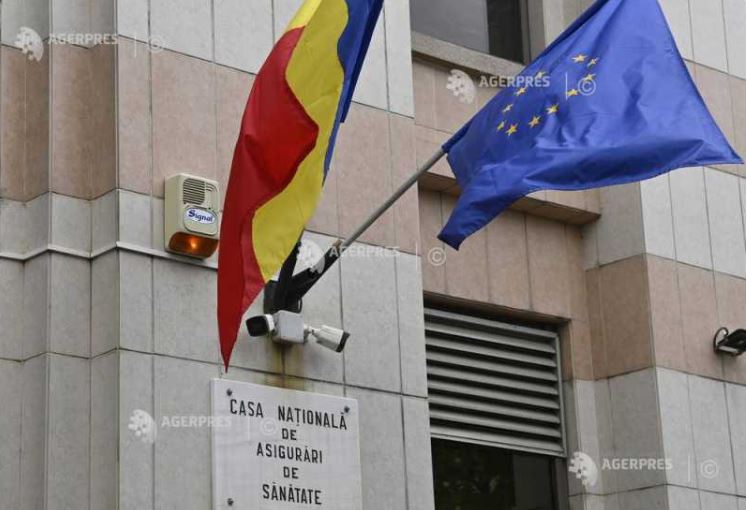

The application of Romania's Justice Laws has continued and has contributed to improving the legislative framework regarding the independence and functioning of the judiciary, but the European Commission finds that a series of issues remain unresolved in justice, as well as in areas such as combating corruption, media freedom and the predictability of the legislative process, shows the chapter dedicated to Romania in the Commission's 2026 Rule of Law Report released on Friday.
Regarding justice, the Commission notes that a reflection on various concerns related to the judiciary in public debates has been put on hold
following a decision of the High Court of Cassation and Justice.
The report notes that several appointments to senior prosecutor positions were made, but no legislative steps have been taken yet to strengthen safeguards to ensure their independence or the organisation and functioning of the judicial police. It also states that some magistrates continue to feel undue pressure from inside the judiciary and judges were recused for intending to refer cases to European Courts.
The occupancy rate of magistrate positions increased in 2025, with measures adopted to tackle the staffing deficit, but the shortage of judges and clerks continues to affect court activity. The legal aid system has been improved but remains underfunded, and the digitalisation of justice is one of the Government's priorities. The report also records an improvement in court efficiency, with civil, commercial and administrative cases being resolved more quickly, while the clearance rate improved as well.
In the field of anti-corruption, the Commission states that the evaluation of the 2021-2025 National Anti-Corruption Strategy has been completed, and the new strategy for 2026-2030 is being prepared. The track record of criminal investigations in cases of petty and high-level corruption remained similar to the previous year, but courts continued to order the closure of proceedings and the annulment of convictions, including in high-level corruption cases, as a result of High Court rulings on the statute of limitations.
The report notes that new rules on 'revolving door' practices have been adopted, introducing restrictions before and after holding public office, and that a new Code of Ethics for Government members, which prohibits receiving gifts, is being implemented. A legislative proposal on asset declarations drafted by the National Integrity Agency (ANI) is under debate, and rules on lobbying activities have been introduced for parliamentarians. ANI is also developing an IT system for whistleblowers.
Regarding the media, the Commission finds that the audiovisual regulator - the National Audiovisual Council operates with insufficient human resources and that digitalisation is progressing slowly. Sector actors have not reached a consensus on self-regulation, and the reform intended to strengthen the independence of public radio and television management is still at an early stage. The report states that media-ownership transparency remains limited and problems persist regarding access to information. The new Audiovisual Code has improved the labelling of content financed by parties and authorities, but certain practices continue to raise concerns. The Commission also notes that an anti-SLAPP law is in preparation, in the context of new cases of journalist-targeted threats and harassment.
The document shows that the Government used fewer emergency ordinances in 2025 than in 2024 and that steps were taken to improve public consultations, although these often remain formal. At the same time, frequent legislative changes and the large number of bills in Parliament continue to affect legislative predictability, and the business sector and civil-society organisations consider this one of their major concerns.
The Commission also states that no progress has been made in accrediting national human-rights institutions, that actions foreseen in the 2025-2030 Open Government Strategy have not yet been implemented, and that civil-society organisations report a shrinking civic space and increased pressure on their activities.
In its recommendations to Romania, the Commission calls for continuing the evaluation of the application of the justice laws and improving the efficiency and governance of the judicial system, strengthening the independence of senior prosecutors and the organisation of the judicial police, adopting measures to improve the investigation and prosecution of offences within the judiciary, including corruption, finalising the reform of asset declarations, limiting the use of emergency ordinances and ensuring effective public consultations, as well as continuing efforts to accredit national human-rights institutions. The European Commission considers the recommendation on introducing lobbying rules for deputies and senators fully implemented. AGERPRES (RO - writing by: Mariana Ionescu; EN - writing by: Simona Klodnischi)
- Category: English
- Date: 2026-07-17 17:45:10
- Foto: Alex MICSIK / AGERPRES Photo