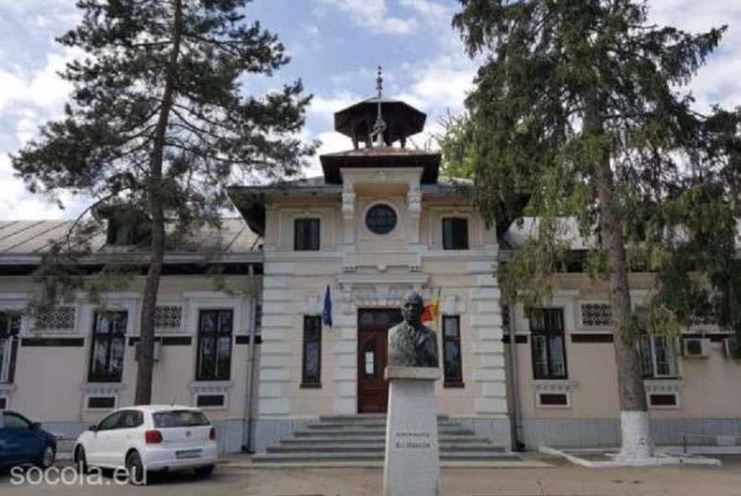


The founder of the settlements for vulnerable people in the Bihor County localities of Dumbrava and Tinca, Viorel Pasca, asked the authorities on Tuesday to find solutions for authorizing the houses built for poor people, stating that he is willing to collaborate for their 'legalization'.
He asks the prefect of Bihor County, the ministers of health and labor, as well as representatives of social protection institutions and the county administration to take the necessary measures so that the relocated people can return to the places where they have their domicile and where they wish to live.
'Considering what has happened these days with the patients from Dumbrava, including the fact that some of them are being held against their will in certain places even though they live in Dumbrava or Tinca, I ask you to take the necessary measures so that they can return to where they actually and legally live and where they want to live,' he said in a post on Facebook.
He stated that he is willing to discuss with the authorities to identify solutions regarding the legalization of some settlements that he managed without having authorizations to provide social services, in the context of the problems related to the operating authorization invoked by the institutions.
'I am willing to meet to discuss and find solutions to enter into legality, more precisely to benefit from operating authorization for a few houses in Dumbrava and Incesti', said Viorel Pasca.
He invited the representatives of the authorities to visit the settlements in Dumbrava to see the situation on the spot and discuss the necessary measures to solve the problem.
'Considering the desperate situation of these people and many others like them, as well as your duty and interest in bringing something better to their lives, I am waiting for you to inform me about the date and place where we can meet to discuss how we will solve this problem. If you wish, you can come to Dumbrava to see and discuss on the spot the conditions and measures that are required in this regard', Viorel Pasca also said.
Acting Prime Minister Ilie Bolojan said on Monday evening that he had asked the interim ministers of health and labor to come up with a proposal for legislative amendments that would introduce legal mechanisms for NGOs and religious groups to care for people in difficulty in medical and social centers.
The Bucharest Court of Appeal decided on Monday to revoke the judicial review measure in the case of Viorel Pasca and four members of his family, in the case of illegal asylums in Bihor County.
Delia Mioara Pacala, who headed branches and public organizations within the association, also escaped judicial review.
On Monday, the judges rejected the appeal of the Directorate for Investigating Organized Crime and Terrorism (DIICOT) prosecutors, who requested preventive arrest, but admitted the defendants' request to revoke the judicial review measure.
On July 1, prosecutors arrested six people in this case.
The following day, they were taken to court with a proposal for preventive arrest, but a judge from the Bucharest Court rejected the DIICOT request and decided that the defendants be placed under judicial control.
All parties appealed the Court's decision, with the Pasca family members wishing not to have any restrictive measures.
The charges in the case are of forming an organized criminal group, continuous human trafficking and complicity in continuous human trafficking.
In essence, prosecutors claim that hundreds of people were brought from hospitals and social assistance departments in several counties and accommodated in buildings located in the communes of Holod, Ceica, Tinca and Lazareni, under the guise of providing specialized care, treatment and social assistance services.
Investigators state that Viorel Pasca did not have the legal, organizational and professional capacity necessary for such an activity and the people hospitalized were in a state of vulnerability, with mental disabilities, could not defend themselves and could not express their will.
Andrada Albescu, the judge at the Bucharest Court who rejected DIICOT's request for preventive arrest, mentions in the reasoning of the decision that the asylums in Bihor were operating illegally, but considers that the accommodation, hygiene and cleanliness conditions in those spaces were 'appropriate'. She also claims that the alternative to the asylums managed by Viorel Pasca was 'the return of the sick to the streets'.
According to the judge, it results from the statements of the witnesses and the beneficiaries that the deceased were buried, with the administrative steps necessary to establish the death and organize the burial in the Greek Catholic cemetery being carried out, 'a circumstance which, although not capable of removing the reasonable suspicion regarding the defendants' interest in the funeral benefits, reveals the fact that the beneficiaries were not abandoned after death'. AGERPRES (RO - writing by: Eugenia Pasca; EN - writing by: Bogdan Gabaroi)
- Category: English
- Date: 2026-07-14 17:38:08
- Foto: Grigore POPESCU / AGERPRES Photo