
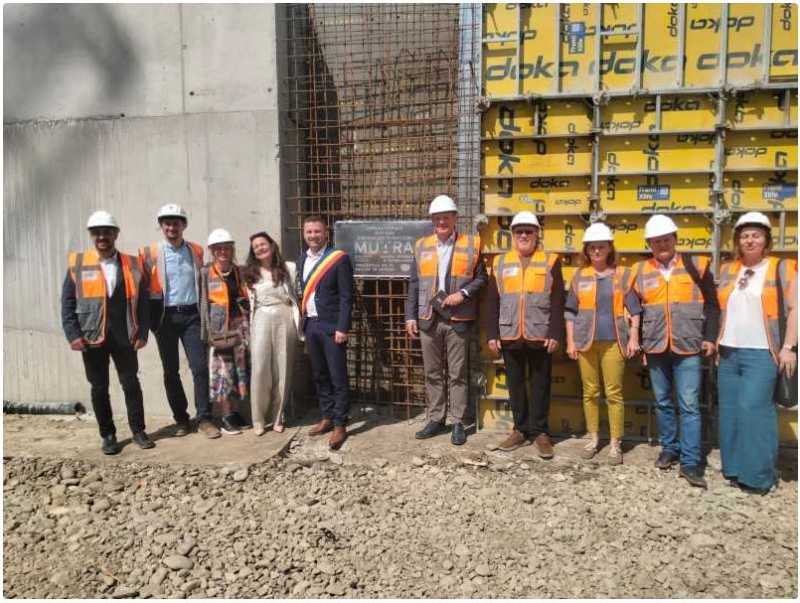
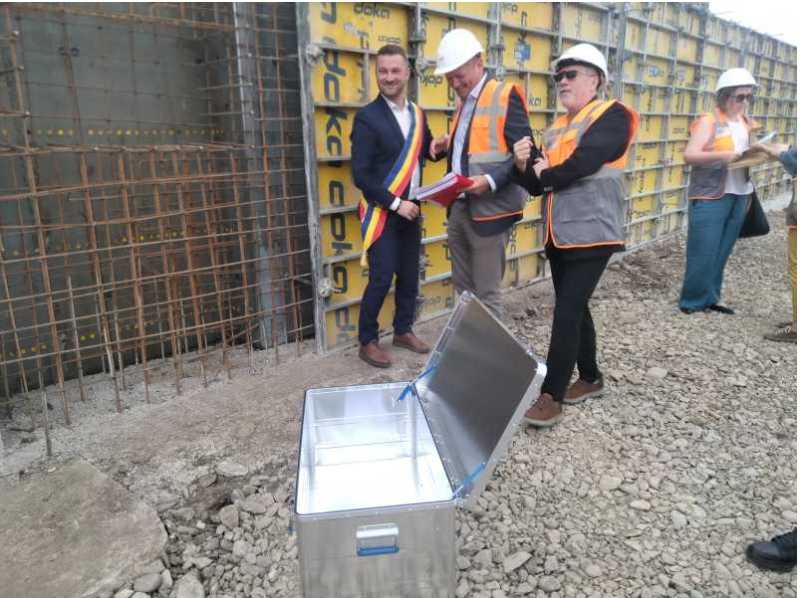
The National Museum of Transylvanian History (MNIT) in Cluj-Napoca 'sent' a time capsule into the future on Friday, scheduled to be opened 100 years from now, on July 10, 2126. The capsule - a metal box containing messages and photographs - will be embedded in concrete inside a wall of MNIT's new building under construction in Floresti.
MNIT manager Felix Marcu said the gesture aims to leave a trace for future generations: 'Today we wanted, as historians, to leave marks for those who will come after us - a time capsule in which those involved in this project left their memories, messages and letters. I hope that, 100 years from now, those who follow us will understand why we made this effort and consider it necessary and useful.'
Acting Culture Minister Andras Istvan Demeter congratulated the team and highlighted the significance of the project: 'This is the first museum in Romania's recent history, after 1989, that is being born - conceived, designed and built. I congratulate all those involved for having the vision to imagine such a construction in this wonderful part of Transylvania, a true point of perspective. This vision deserves to be placed in the time capsule, so that those who come after us will have the courage to dream and will have what we lack so much in this country: vision.'
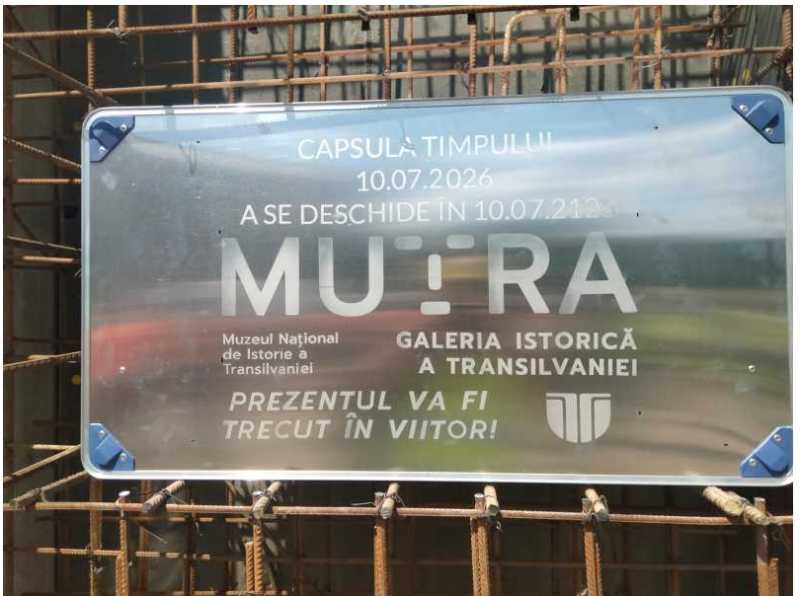
The new MNIT building, valued at RON 145 million, is nearing completion. According to Marcu, 53% of the investment comes from NRRP funds, and 47% from the Romanian state. The contract was signed with the Ministry of European Investment and Projects several years ago, construction began one year ago, and the opening is scheduled for August 30.
Marcu added that the museum will include all functions of a modern institution: large underground storage areas and conservation-restoration laboratories; an exhibition space of 2,500 square metres; museum-pedagogy and social spaces indoors and outdoors; an amphitheatre area; a large hall for conferences or film screenings; offices and administrative facilities.
The museum is being built on a 15,583-square-metre plot and will have a usable area of 11,344 square metres across three levels. AGERPRES (RO - writing by: Marius Septimiu Avram; EN - writing by: Simona Klodnischi)
- Category: English
- Date: 2026-07-10 21:18:52
- Foto: Marius Septimiu Avram / AGERPRES