

Romania could become an example for Europe in the field of digitalisation, and establishing a Ministry for Digital Transformation would be an important step, as it is no longer appropriate in the era of Artificial Intelligence for digitalisation to remain a secondary responsibility within the Ministry of Economy, Entrepreneurship and Tourism, said Vasile-Ciprian Rus, chairman of the Senate Committee for Communications, Information Technology and Artificial Intelligence, on Monday at the conference 'Digitalisation and Cybersecurity - Cyber Threats in the Age of Artificial Intelligence'.
'Cluj may be an example in terms of digitalisation, but I believe Romania itself can become an example for Europe. Whether we are talking about the ECCC, various ministries, the Authority for the Digitalisation of Romania (ADR), or the Special Telecommunications Service (STS), the players are good. What is truly missing in this country is a coach - someone capable of coordinating them, training them and showing them how to work together to deliver results.
'It would be an important step to finally establish a Ministry for Digital Transformation. In the era of Artificial Intelligence, we cannot have all digitalisation matters managed by a Ministry of Economy, Entrepreneurship and Tourism where digitalisation is effectively an afterthought.
'If we want results, every team - whether ECCC, the National Directorate for Cyber Security (DNSC), or others - is already training well and has excellent resources. What we lack is a vision capable of bringing everyone together and teaching them how to operate as one team. We are living in the age of Artificial Intelligence. I do not believe anyone can seriously dispute that. Any attempt to ignore or fail to keep pace with technological developments in the AI era will only hinder our progress,' Rus said.
He added that developments in new technologies are likely to accelerate even further over the next two years.
'If we do not want to be left behind, we must increase our pace and accelerate our efforts. As a country, we have become accustomed to talking about digitalisation. If a local authority uploads a form to its website that citizens can download and complete by hand, it considers the service digitalised.
'Yes, we have successfully transposed the NIS2 Directive and implemented it. We are very good at paperwork. Whether convenient or not, our priority is to ensure protection. When discussing cybersecurity in the age of Artificial Intelligence, we must not forget that this rapid pace of change also requires us to focus on resilience.
'We need to design and build systems that are secure by default and secure by design. The communication relationship between citizens and the state can be simplified. In Romania, we are working on a legislative initiative introducing the concept of a digital domicile, which would not be mandatory. Each Romanian citizen would be able to declare a digital domicile, meaning the online channels through which they can be contacted by any public institution. All notifications sent by the Romanian state would then be delivered through that channel,' the senator explained.
Representatives of public authorities and professional associations took part on Monday in the 10th edition of the conference 'Digitalisation and Cybersecurity - Cyber Threats in the Age of Artificial Intelligence'. AGERPRES (RO - writing by: Daniel Badea; EN - writing by: Cristina Zaharia)
Romania can be a digitalisation model for Europe (official)

Conţinutul website-ului www.agerpres.ro este destinat exclusiv informării publice. Toate informaţiile publicate pe acest site de către AGERPRES sunt protejate de dispoziţiile legale incidente. Sunt interzise copierea, reproducerea, recompilarea, modificarea, precum şi orice modalitate de exploatare a conţinutului acestui website. Informaţiile transmise pe www.agerpres.ro pot fi preluate, în conformitate cu legislaţia aplicabilă, în limita a 500 de semne. Detalii în secţiunea Condiţii de utilizare. Dacă sunteţi interesaţi de preluarea ştirilor AGERPRES, vă rugăm să contactaţi Direcţia Marketing - marketing@agerpres.ro.
Alte știri din categorie

President Dan says Foreign Ministry investigating Orlivka school case
President Nicusor Dan said on Friday that Romania's Foreign Ministry has opened an investigation into the case of the school in Orlivka, Odesa region, where a Year 1 class taught in Romanian was closed. Speaking at a news conference held after the Carpathian Integration Initiative 'Carpathian 8' Summit, he said that 'remarkable progress has bee

Bolojan: We will try, within our possibilities and depending on our electoral weight, to form a Government
President of the National Liberal Party (PNL) Ilie Bolojan said on Friday that, although Siegfried Muresan's nomination for prime minister came three months late, the party would deal with the situation 'responsibly' and seek to form a Government based on its electoral weight. 'Yesterday, about 30 minutes beforehand, I learned from the piece of

Siegfried Muresan: We will start work on a government programme; beginning of next week - discussion with MPs
Prime Minister-designate Siegfried Muresan announced on Friday that he was starting work on the government programme together with the National Liberal Party (PNL), Save Romania Union (USR) and the Hungarian Democratic Union of Romania (UDMR), mentioning that he would present the priorities at the beginning of next week and, based on these, would hold an "extremely tran

CCIR's Daraban: The diaspora is not a sentimental issue but a chapter in the national economy
The experience gained by Romanians in the diaspora in competitive markets must be transformed into investment, jobs and exports, believes Mihai Daraban, President of the Chamber of Commerce and Industry of Romania (CCIR). According to a press release from the organisation sent to AGERPRES, the institution is strengthening its partnership with ROUNIT - Reunited
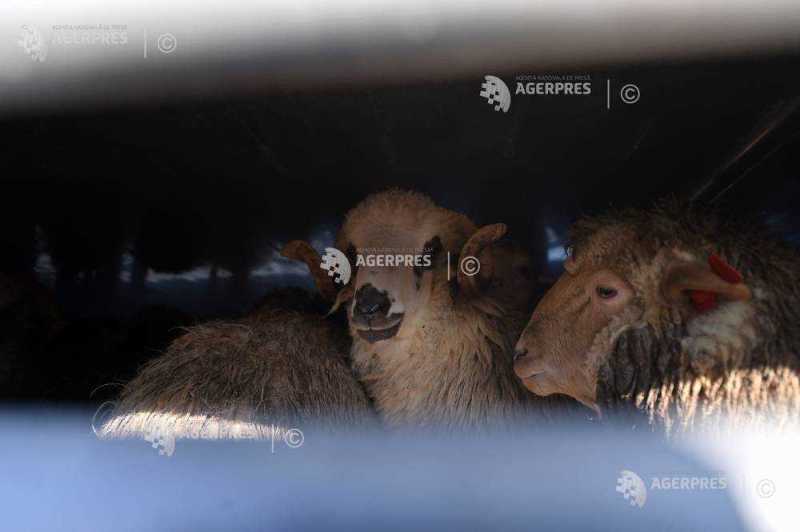
European Commission approves ANSVSA's Action Plan to unblock sheep and goat exports
The Action Plan of the National Veterinary Sanitary and Food Safety Authority (ANSVSA) for unblocking exports of sheep and goats has been approved by the European Commission, allowing exports of carcasses and products to resume under the differentiated vaccination scheme. According to an ANSVSA release sent to AGERPRES on Friday, the approved solution protects
Health Insurance House launches project on cross-border exchange of medical images, laboratory results, discharge reports
The National Health Insurance House (CNAS) announced on Friday the launch of the European project 'Romanian Medical Images, Laboratory Results and Discharge Reports' (RO-MI-LR-DR), for the cross-border exchange of medical images, laboratory results and discharge reports. The project is funded through the EU4Health programme, with the European Health an
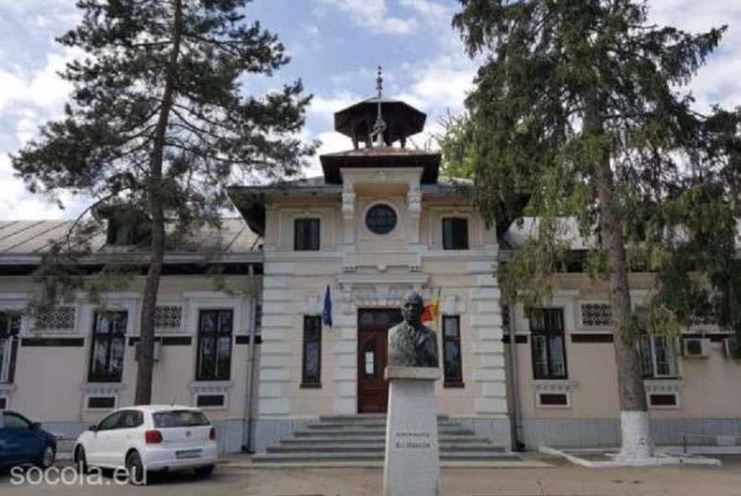
'Socola' Institute of Psychiatry in Iasi to hold new memory testing campaign at weekend
The 'Socola' Institute of Psychiatry in Iasi has announced that it will hold the third edition of its 'Memory Testing Campaign' on Saturday and Sunday, a campaign addressing people of all ages and aimed to identify individual risk factors that may predispose people to memory disorders, while also providing participants with specialist counselling.

'Brancusi and His Muses' exhibition opens at Art Safari
'Brancusi and His Muses', the largest exhibition dedicated to the great sculptor to be held in Romania during Brancusi Year, opened on Thursday evening at the Art Safari New Museum. Curator Doina Lemny said she wanted the initiative to be different, allowing the public to enter the artist's studio atmosphere. 'It is true that Brancusi's wor