
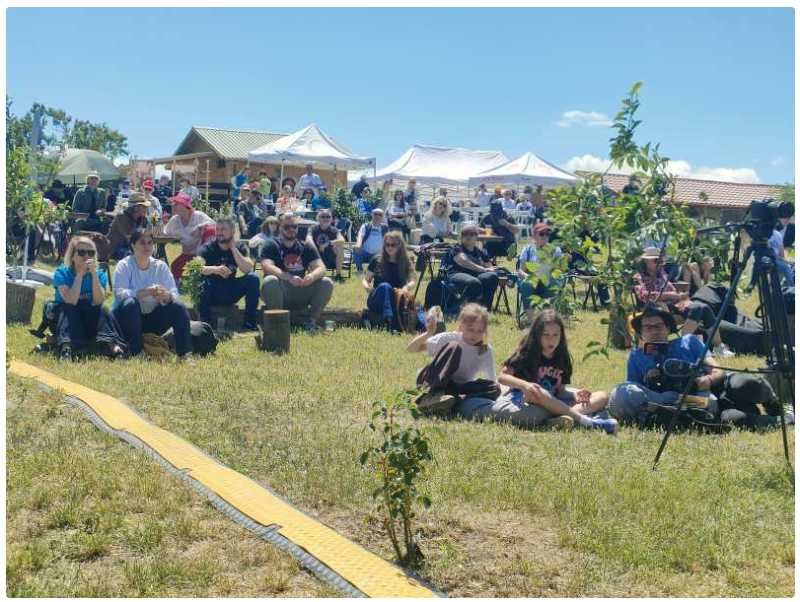
The start of the tourist season in the Danube Delta is 'promising' for some guesthouse owners, despite unfavorable weather and the war waged by Russia in Ukraine, with visitors showing interest both in outdoor events and in debates on current affairs.
The owner of a guesthouse in the village of Jurilovca, Vasilica Bold, told AGERPRES that the main issue for some guests is the bad weather but that, despite this, he is recording a similar number of tourists compared with the same period last year.
'The start of the season is promising. We have the same number of tourists, concentrated mainly on weekends, but once the school holidays begin, things will ramp up. Summer bookings are the same as in previous years. The weather isn't helping us yet, but we are optimistic. Lately, people are guided by the weather. If it rains, they cancel their reservation and come back on other days,' said Vasilica Bold.
He offers guests both traditional Romanian dishes and high-end cuisine and, together with other local operators, advocates for reducing bureaucracy.
'There is a need for a real simplification of bureaucracy, and the Government should think about real reforms, including for those who want to return from abroad. A program is needed to stimulate birth rates, because in 20 years you will meet today's children in the labor market, and you, as a state, will benefit if you want to develop,' the owner of the guesthouse on the shore of Lake Golovita argues.
Last year, due to budget constraints, Jurilovca suspended the Fish Borscht Festival, but it was included among tourist resorts of local interest by a Government decision.
Things are different for the village of Somova. Located on the Somova-Parches complex, on the Romanian-Ukrainian border, it hosted last weekend the Dichis'n'Blues Festival, which included sunset concerts and midday debates on current affairs.
'The festival here is one-of-a-kind. Events are always organized between concrete structures, between apartment blocks, but here it's a rustic, beautiful atmosphere. It's always a pleasure for me when I deal with a band that plays in a balanced way, and whose members respect each other in terms of level, intonation, dynamics. Unfortunately, nowadays many bands go on the idea that everyone wants to be heard the loudest, and it turns into a competition that doesn't benefit the audience either,' said one of the festival participants, Adrian Motoc.
He made it clear he is not afraid of the war nearby.
'In general, these problems are far too big and whatever I might do, nothing would change. I am not afraid of war or disease, and that depends on your inner nature, as a person,' Motoc added.
The debate 'KGB Blues: Putin's Nostalgia and the War in Ukraine', held by Armand Gosu, Cosmin Popa, Daniel Citiriga and Catalin Gombos, drew more than 100 people. It explained nostalgia through an 'intellectual deadlock', described the Russian regime as a totalitarian system based on a mix of secret-service networks, criminal networks, control of public space and clan interests, and predicted that the end of the war in Ukraine will bring Putin's fall.
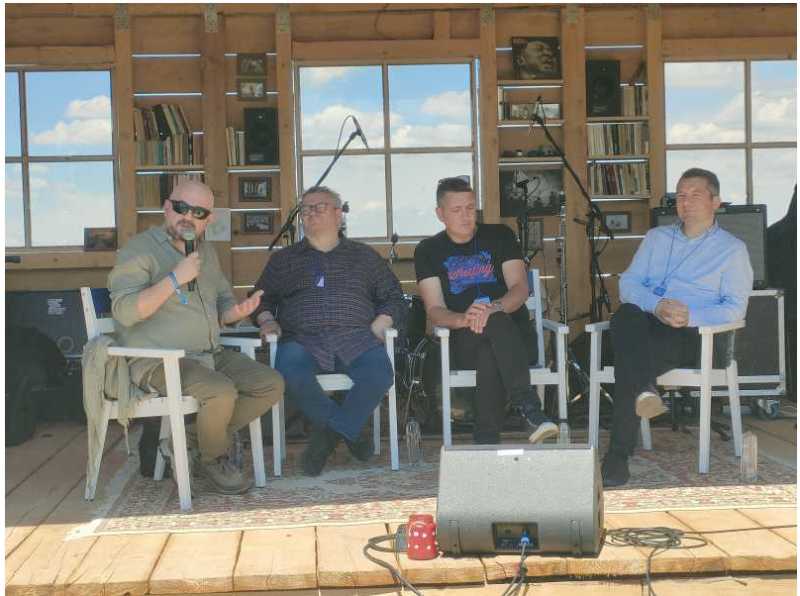
'I don't see Putin escalating. The counteroffensive he attempted on March 18 failed within a week, the losses are huge, and at this moment I see Zelensky escalating and being one step away from militarily isolating Crimea - and this, truly, could be a moment of strategic significance. (...) We are on the eve of a moment with strategic value,' said political analyst Armand Gosu during the debate.
Participants were interested in how much 'Russia' exists in Romania, and answers continued even after the Q&A session ended.
'I travelled through the Danube Delta in Romania, Ukraine and the Republic of Moldova, and the differences are significant. In Romania, the Delta seems abandoned by the state, perhaps because there are very few inhabitants and, electorally, the political investment isn't worth the effort. I saw villages with three or four inhabitants, no clinics, no nurses even in important villages, no pharmacies. It seems like an abandoned space on the edge of a war, during which the enemy may look with interest at this place, apparently not very secure militarily, and certainly not secure in human terms. In Ukraine, the Delta is much more urbanized and advanced. Where we have villages, they have towns. I heard the story of a woman from Periprava who was about to give birth and, because she couldn't reach Tulcea, as she had no means, the Coast Guard arranged to take her to Vylkove, in Ukraine. There are cases where we simply cannot protect this area,' journalist Sabina Fati told AGERPRES. She also delivered the talk 'The Black Sea and the Danube Delta. Road Stories' at the Somova festival.
In her view, the event in the village on the Romanian-Ukrainian border was an 'intellectual' one, and the debates only enlivened the festival.
'The Delta, with its extensions into Ukraine and the Republic of Moldova, is a shared area, but we now have a problem with Bystroe, which we have abandoned because Ukraine is at war and we don't want to aggravate or complicate the relationship. But it is an issue the two states must solve. And yes, the development of this region depends greatly on what Romania manages to do, because after the war ends, there will be massive investment in Ukraine and in border regions, and here it depends very much on whether Romania manages to overcome the handicap it has had so far in absorbing European and international funds. If it manages to prove efficiency and present projects, Constanta and Tulcea can become development hubs. Everything depends on the vision of politicians and whether they can overcome the risk we now see in the SAFE program, where all structures are fighting each other behind the scenes and were even capable of bringing down a Government just for a program they want to divide among themselves. The debates only enlivened this extraordinary festival held on the border with Ukraine. I find it wonderful,' said Sabina Fati.
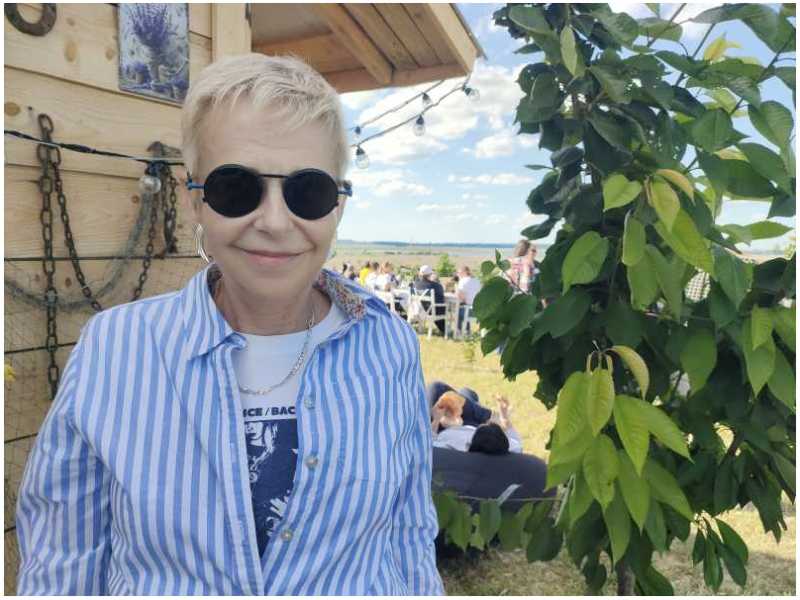
For the community of Somova, the three days of festival were welcome, despite the RO-ALERT warning about possible drone debris received during the event.
'All the guesthouses in the commune were full, and the event actually promoted the locality, which is extraordinary,' said local guesthouse owner Sanda Cojocaru.
***
This summer's events in the Delta invite visitors to explore the reservation regardless of weather - by bicycle, kayak or on foot through lesser-known areas, to watch the sunset on the Danube, or to join community cafés and even fishing competitions dedicated to women.
The association 'Cu drag din Sulina' (Lovingly from Sulina) will hold an open meeting on June 18 for those who want to contribute to the area's future.
'We will share ideas, experiences and perspectives about our community and about what makes Sulina such a special place. The meeting is part of the project 'Sulina, a town in the reservation', through which we aim to bring people together and encourage dialogue about the relationship between community, water and the environment. Whether you are a local, entrepreneur, fisherman, teacher, young person or a visitor in love with Sulina, we welcome you. The 'Community Café' event, run in partnership with the PACT Foundation, is part of the 'Clean Waters' program launched in 2019 by Mai Mult Verde and Lidl Romania to reduce plastic pollution in waterways,' the association wrote on social media.
The Mila 23 village will host on Saturday 'Bibaniada', Romania's only women's team perch-fishing competition, organized by the Ivan Patzaichin-Mila 23 Association.
'The competition is inspired by the tradition preserved in Mila 23, when, after the fishing ban period, the women of the village head out onto the water to fish for perch. Saturday is divided into three parts: the first round is the fishing competition, the second is a gastronomic festival with perch stews and other fish delicacies, and the third is an artistic program - plus many other surprises,' the event page on Facebook states. AGERPRES (RO - writing by: Luisiana Bigea; EN - writing by: Simona Klodnischi)