
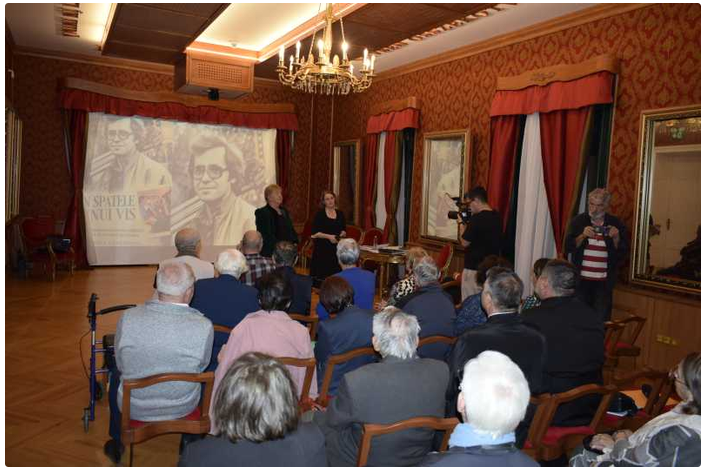
The 23rd edition of the SIMFEST International Film and Television Festival, held in Targu Mures between September 28 and October 4, once again affirmed its role as a cultural crossroads where television journalism, cinema, photojournalism, visual arts and literature converge.
This year's Grand Prize went to 'Mother of Snow Cranes', directed by Finland's Iiris Harma, a visually striking documentary exploring devotion and humanity's relationship with nature. The distinction was all the more significant given the scale of the competition: 45 productions from 25 countries made the official selection after being chosen from 215 entries submitted from across the globe.
The jury faced what organisers described as an exceptionally competitive field. Alongside the Finnish winner, the Special Jury Prize was awarded to the Italian production 'Non eramo mai stati malati' (We Were Never Ill), directed by Emilio Gelosi and Fabio Blanco.
Among the other major winners were 'Amunecada' by Germany's Tony Albrecht in the Animation category, 'About My Mom' by Turkey's Soner Sert for Feature Fiction, and 'Theatre from the Mud', produced by Salamandra Film and directed by Gyuri Zsuzsi and Kovacs Akos of Hungary, in the Documentary category.
Awards also went to 'November Fog', created by AnnaLena Hoehne, Justin Babilon and Gianluca Bruno of Dortmund University of Art, which won the Student Fiction Film section; 'Tovarasul' (The Comrade), written and directed by Romania's Trevor Poots, received the Dacin Sara Association Award in the Mircea Veroiu short-film competition; while the Screenplay Award went to Jesse Scales of the United States for 'Alberth'. Two cinematography prizes were awarded, to Andre Guiomar's 'Ku Handza' (Portugal) and Piotr Szubra's 'Dogleg' (Poland).
SIMFEST also honoured Romanian directors Elisabeta Bostan and Serban Marinescu with Excellence Awards for Lifetime Achievement, recognising their enduring influence on generations of filmmakers.
'SIMFEST is not only about competition, but about the bridges that film builds between destinies, cultures and generations. This year we saw extraordinary stories that started from threads of memory that were almost lost and came back to life on screen. It is living proof that authentic cinema survives the times,' festival organiser Corina Ceausescu told AGERPRES.
One of the festival's most talked-about screenings was 'Comatogen', directed by Igor Cobileanski, a film organisers described as possessing 'remarkable psychological tension.' Nominated for seven Gopo Awards and winner of two, the film generated nearly 40 minutes of discussion between audiences and cinematographer Cristian Gugu following its 104-minute screening.
'I regret not making the longer version of the film. There were many dialogues that did not make it into the final cut and which would have added a different kind of tension. I believe it's important for each of us to be ourselves and say what we think. That's why I sleep very well at night. For several years now, I have tried to always say what I think. I don't always succeed, but I keep trying,' Gugu said.
Another emotional highlight came during Romanian Film Days, when audiences revisited 'The Most Beloved of Earthlings', one of the Romanian cinema's landmark productions, in the presence of actor Dorel Visan and director Serban Marinescu.
'The screening carried special significance, 35 years after the film was made, and the meeting with audiences once again brought into focus a production that continues to impress through its artistic strength and the human truth it conveys. In Dorel Visan's view, 'The Most Beloved of Earthlings' possesses precisely this power of authenticity,' Ceausescu said.
'A film lives a long life if it contains the truth of life. Without the truth of life, not only films but any work in any field is nothing. This film conveys that truth. It has genuine writing, great writing. It features extremely valuable actors. An actor should not play roles, but recreate destinies. This police officer is a destiny, not a role,' Visan, who starred in the film, told the audience.
Serban Marinescu recalled the circumstances in which the film was made, noting that production lasted just 32 days across two shooting schedules during a difficult period for Romanian cinema.
'The greatest joy this film has brought is that it still lives after so many years. I never felt tired. It was a joy. We were a family. This was my family for as long as the film was being born,' the director said.
He also remembered renowned actors Mircea Albulescu and Gheorghe Dinica, who would return to the set even after completing their own scenes simply to support their colleagues.
Beyond the competition and feature-film screenings, SIMFEST transformed venues across Targu Mures and its surroundings into creative laboratories.
'The exhibition 'How I See It', hosted in the Tanners' Bastion of the Medieval Fortress, offered a fascinating journey into photographic art through director Manuel Marin's work. Alternating between black-and-white and colour images, the exhibition turned faces, gazes and spaces into silent characters, inviting visitors to complete the stories hidden behind each frame,' Ceausescu said.
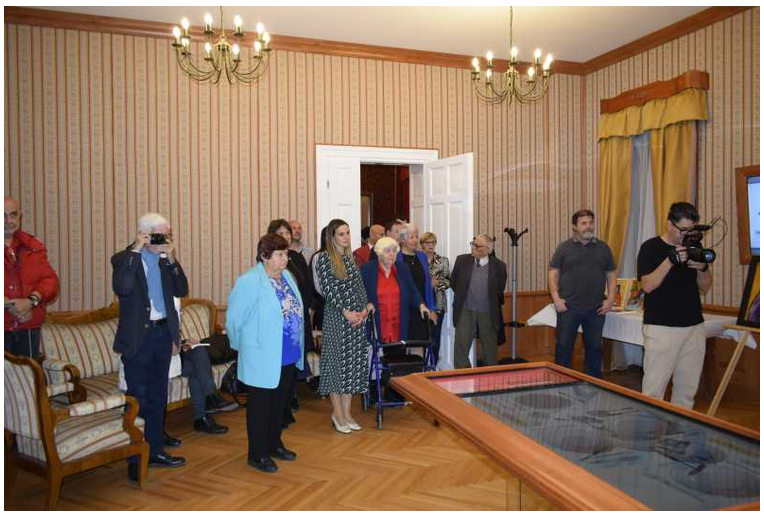
Festival guests and jury members also took part in documentary visits to local institutions and landmarks, including the ice rink, the Medex Oncology Hospital, the Saints Constantine and Helena Church and the Mariaffi Castle in Sangeorgiu de Mures.
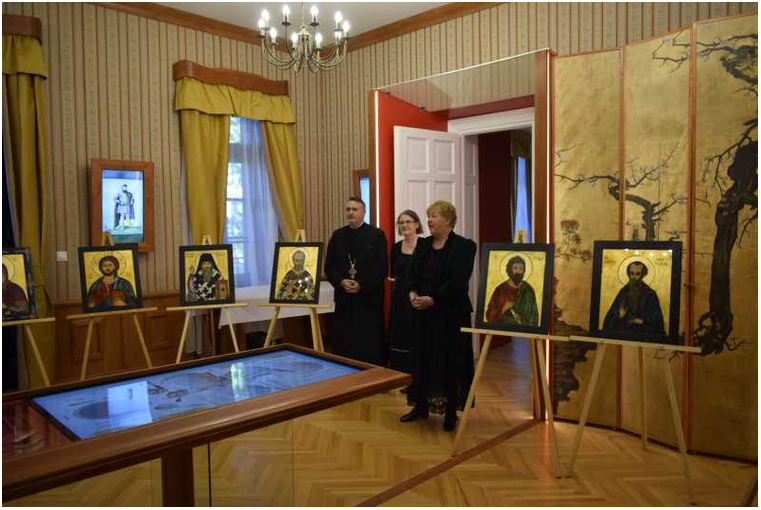
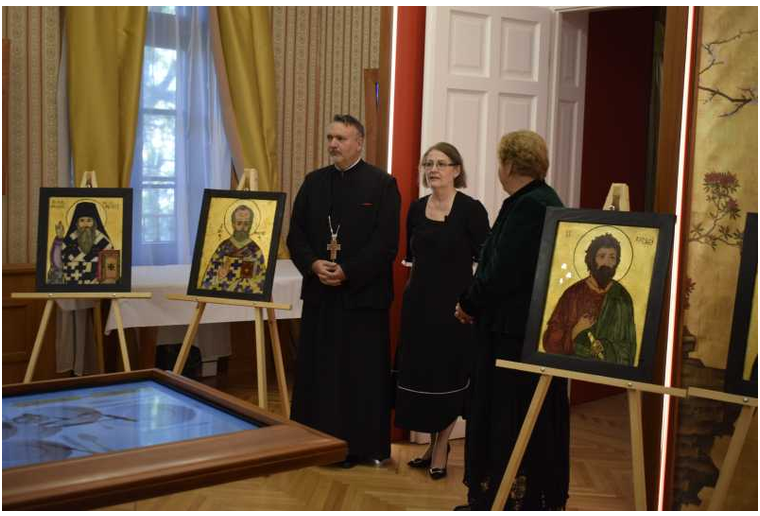
At the castle, visitors also attended the opening of 'Icons That Watch Over Us', an exhibition of glass-painted icons curated by priest Eugen Baraian. The collection included large-scale works temporarily displayed on church walls, as well as pieces by renowned icon painter Matia Mera.
The castle also hosted a series of book launches.
'The central event was the launch of 'Behind a Dream. Ioan Ceausescu and the Story of SIMFEST Told by Those Who Knew Him', a book I wrote myself. Its publication comes at a sensitive moment, nearly two years after the passing of journalist Ioan Ceausescu, the founder and heart of the festival. But this was only one stop in an editorial marathon that also included exceptional titles such as 'A Book About Father' by director Mihai Lungeanu, 'Between Two Lives' by Ioana Giurgiu, 'My Dear Ones... Correspondence of a French Officer on the Romanian Front. The Berthelot Mission (1917-1918)' by Jean-Christian Tirat, 'The Last Dance' and 'The Blossoming Apple Tree' by Irina Moldovan, and 'Holding Jesus' Hand, We Can Cross Anything' by Maria Matis and Marc Andrei Dogari,' Ceausescu went on to say.
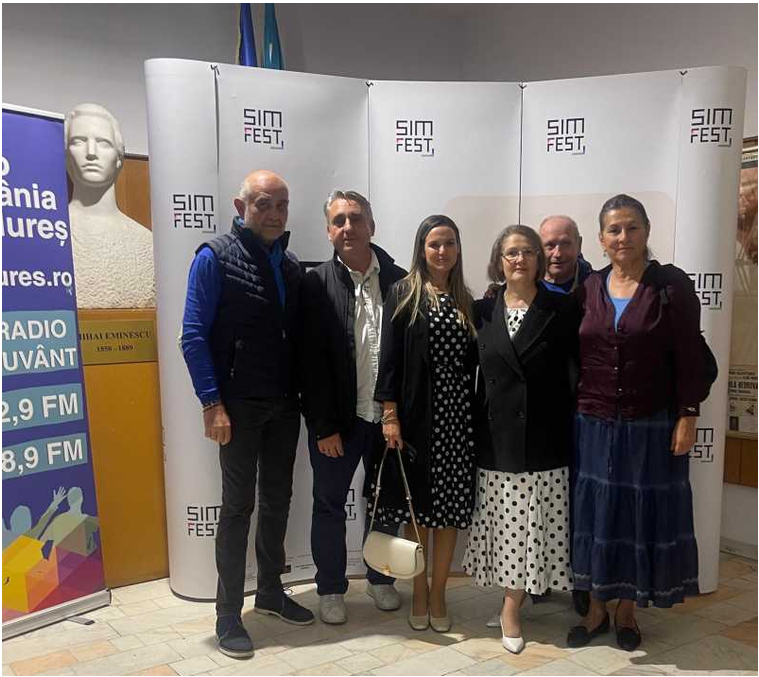
Photo credit: SIMFEST
The festival also devoted considerable attention to younger audiences.
More than 120 pupils from School No. 7 in Targu Mures watched 'The Champion', a film dedicated to Nadia Comaneci in the year marking the 50th anniversary of the first perfect 10 in gymnastics history. The screening quickly turned into a conversation about ambition, hard work and pursuing one's dreams, whether in taekwondo, swimming, IT, forensic science or firefighting.
Another group of students, this time from Europa School, stepped behind the scenes of storytelling during an interactive masterclass led by actor Alexandru Cinezan.
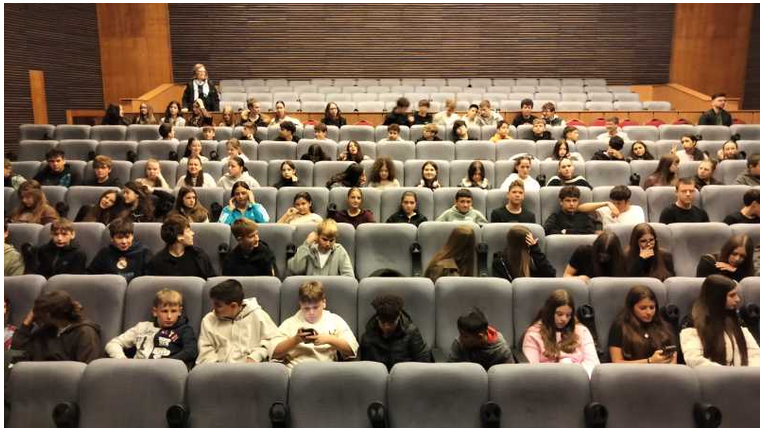
Photo credit: SIMFEST
'For an hour, the children experimented with drawing on masks and learned how to make puppets from simple materials, discovering how light, shadow and movement bring a story to life. Through this unique blend of international competition, screenings with strong moral messages, the recovery of historical archives, such as Dan Curean's documentary Family Reels, and hands-on workshops, SIMFEST 2026 pushed beyond the traditional boundaries of cinema. The festival once again proved itself to be a living organism, breathing in rhythm with the entire Mures community,' the organiser said.
By combining international competition with artistic dialogue, historical memory, education and community engagement, SIMFEST 2026 demonstrated that it remains far more than a film festival. It continues to serve as a meeting place for stories, ideas and people, while keeping alive the legacy of its founder and the enduring power of authentic cinema, Corina Ceausescu concluded. AGERPRES (RO - writing by: Dorina Matis; EN - writing by: Simona Klodnischi)
- Category: English
- Date: 2026-10-05 18:21:07
- Foto: Dorina MATIS / AGERPRES