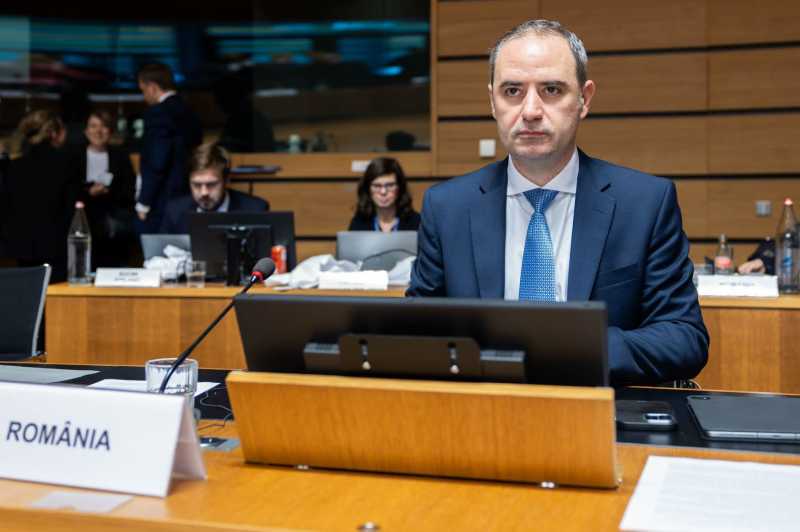


The 'Elie Wiesel' National Institute for the Study of the Holocaust in Romania held its annual commemoration ceremony on Friday at the Holocaust Memorial in Bucharest.
In his remarks on this occasion, Senate President Mircea Abrudean said that Romania must fully own up to its role in the tragedy, stressing that 'the Romanian state must acknowledge and assume its historical responsibility for the actions committed at the time.'
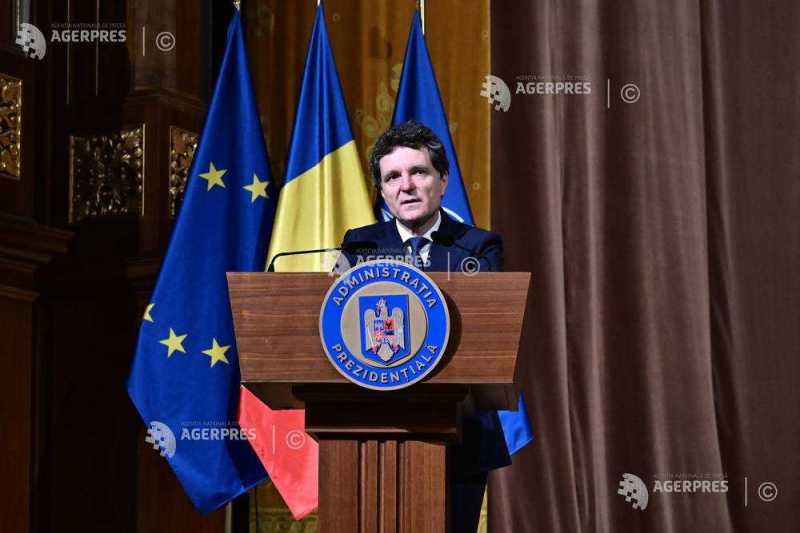
In a message delivered by state adviser Cristian Rosu, President Nicusor Dan said remembering the Holocaust is essential to understanding how atrocities became possible 'with the involvement of the Romanian state authorities and the complicity of those who remained indifferent,' emphasizing that Romania must confront its own Holocaust history.
Prime Minister Ilie Bolojan, in a message delivered by Secretary of State Dragos Hotea, warned that the Holocaust was the result of a process in which 'propaganda, antisemitism and hate speech were fostered and gradually normalized,' adding that it demonstrates how far a society can descend when prejudice and hatred become accepted.
Foreign Minister Oana Toiu said the Holocaust must remain a living lesson rather than merely a subject of academic study, stressing that 'today's commemoration is a renewed commitment to tirelessly combat these old demons - hatred, intolerance and dehumanization,' and warning against indifference when human dignity is violated.
Mariana Buceanu Costache, representing the National Agency for Roma, and Ovidiu Banescu, vice-president of the Federation of Jewish Communities in Romania, also highlighted the importance of preserving the memory of Holocaust victims, not merely 'by looking to the past, but by building, through education and strong democratic institutions, a society in which such tragedies can never happen again.'
Deputy head of mission at the U.S. Embassy in Bucharest David Galbraith said that, 'as Secretary Rubio has stated, there can be no compromise with antisemitism.'
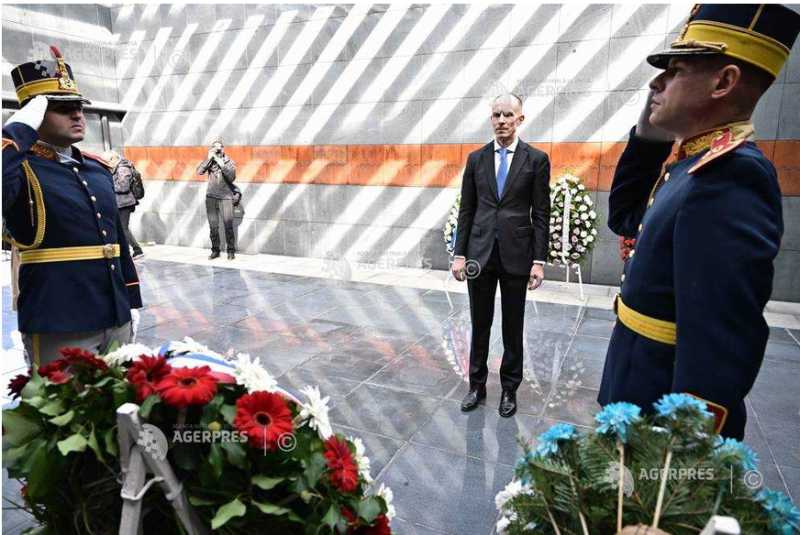
'This scourge must be confronted and defeated. Every year, there are fewer survivors left to tell their stories. This makes confronting antisemitism and teaching the truth about the Holocaust even more urgent. Romania has demonstrated leadership on both fronts, but much remains to be done. Today, Romanian law requires every high school to teach the history of the Jewish people and the Holocaust and provides for the establishment of a National Museum of Jewish History and the Holocaust in Bucharest,' David Galbraith stressed.
In his turn, deputy head of mission at the Israeli Embassy in Bucharest Erez Golan said that 'facing the past honestly is not a sign of weakness, but the ultimate sign of national courage.'
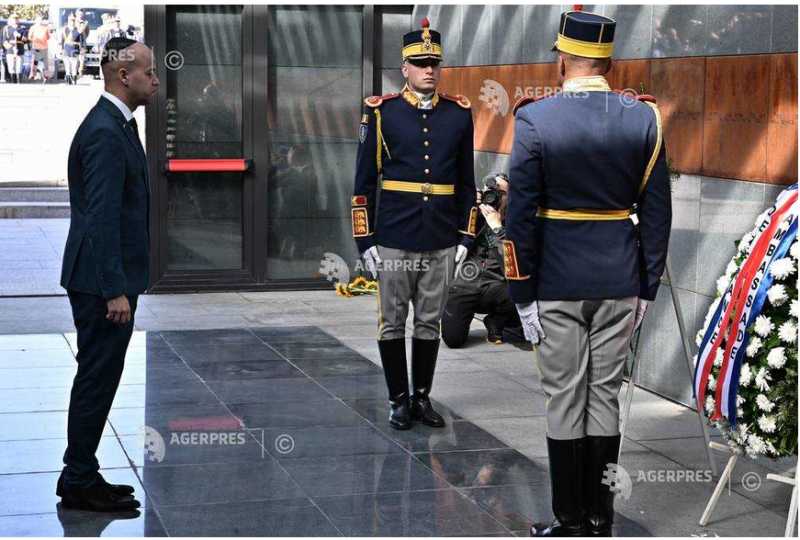
'Anti-Zionism, the denial of the Jewish people's right to self-determination, is simply antisemitism rebranded. Facing the past honestly is not a sign of weakness. It is the ultimate sign of national courage. It is the legacy of Dr. Traian Popovici, the mayor of Chernivtsi, who proved that even in the darkest hours of history, leadership is a choice. Protecting Jewish life, completing the Holocaust Museum and combating antisemitism are measures for Romania itself, for its democratic integrity and moral strength. Romania has already demonstrated courage by acknowledging its historical responsibility, and we are confident that it will show the same determination in protecting its future, honouring the victims and respecting the survivors,' Erez Golan said.
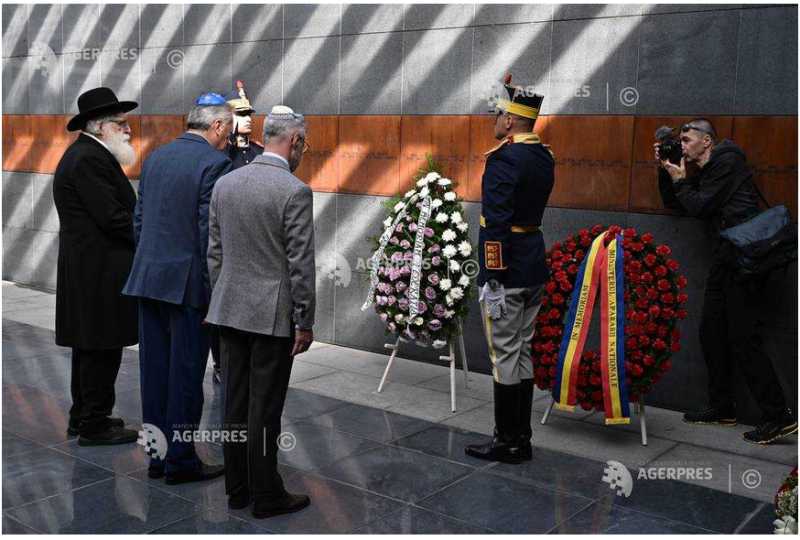
Representatives of the Presidential Administration, Parliament, Government and Diplomatic Corps, members of the Jewish and Roma communities, and students from Bucharest attended the wreath-laying ceremony.
***
According to the 'Elie Wiesel' National Institute for the Study of the Holocaust in Romania, 85 years ago, on October 9, 1941, the deportation of Jews from Southern Bukovina began. In October 1941 alone, more than 35,000 Jews - mostly children, elderly people and women - from Dorohoi, Suceava, Câmpulung Moldovenesc, Vatra Dornei, Radauti, Gura Humorului and other nearby localities were escorted to Transnistria.
The overall scale of the atrocities is reflected in the following figures: more than 300,000 Jews of Romanian or Ukrainian origin, victims of the Antonescu regime, died from gunfire, cold, hunger or disease, while 11,000 Roma were exterminated in Transnistria by the Romanian authorities as a result of the Antonescu regime's racial policies.
Beyond these facts and figures, the life stories of those who fell victim to inhumanity, indifference and silence remain a testament for those who wish to learn about and understand recent history, the institute said. AGERPRES (RO - writing by: Daniel Popescu; EN - writing by: Simona Klodnischi)
- Category: English
- Date: 2026-10-09 16:56:12
- Foto: Mihai Poziumschi / AGERPRES Photo