

AGERPRES special correspondent Florin Stefan reports: Armenian Prime Minister Nikol Pashinyan will pay a visit to Bucharest by the end of the year to sign the strategic partnership between his country and Romania, after the decision to upgrade relations between the two countries to this level was announced in New York on Wednesday by the head of the government in Yerevan and Romanian President Nicusor Dan, Foreign Minister Oana Toiu said in an interview granted to AGERPRES in New York on Wednesday evening.
The Foreign Minister also spoke about the war in Ukraine, in the context of the Security Council debate on the matter, which was also attended by President Nicusor Dan. She said that the number of countries joining diplomatic initiatives to condemn Russia's illegal actions is growing, but stressed that the ultimate objective is sustainable peace, which must begin with a ceasefire that allows time to rebuild trust.
In her interview with AGERPRES, the Foreign Minister also said that Romania had been mentioned at meetings of the Board of Peace, an initiative of US President Donald Trump, for its efforts to carry out medical evacuations of sick children from the Gaza Strip, both for patients who arrived in Romania and for those evacuated to other countries that offered to receive them and provide oncology treatment.
Last but not least, Oana Toiu mentioned the foreign policy goals that, in her view, should continue to be pursued if Romania is to have a new government soon.
AGERPRES: President Nicusor Dan addressed, in his speech and in subsequent statements, a number of issues that stood out, namely the efforts to secure support for Dacian Ciolos' candidacy for the post of Secretary-General of the International Organisation of La Francophonie (OIF) and, secondly, the positions concerning Ukraine and the condemnation of Russia, which have been very firm. Would you say that Romania has achieved its objectives at the UN on these two matters?
Oana Toiu: President Nicusor Dan's address to the plenary meeting of the United Nations General Assembly clearly set out Romania's priorities on the global stage, not only for this week but across the entire ecosystem. Romania is a responsible country that has acted on the right side of history and will continue to do so, because it is very important this week to position Romania as a country connecting Europe with the South Caucasus, Asia and Africa, particularly from the perspective of maritime trade in the Black Sea.
For example, yesterday (Tuesday - ed. note), a meeting was jointly convened by Romania, France, the European Commission and Ukraine on maritime security and protecting navigation in the Black Sea. Why is this important? Because the Port of Constanta is, for Romania, both an opportunity to attract investment to increase capacity and a source of revenue and economic growth, but, in the UN context, what is very important is the contribution we make to global grain trade, which directly affects, as I said, countries in Asia, Africa and the South Caucasus.
Another piece of very good news this week is the meeting we had with Armenia. (Nikol) Pashinyan, together with President Nicusor Dan, announced the decision to upgrade relations between the two countries to the level of a strategic partnership. We will see a visit to Bucharest by the end of the year, during which the strategic partnership will also be signed. This is the result of many months of negotiations and very good news, because Romania's relationship with the South Caucasus puts the region on the map also from the perspective of logistical connections.
The United States also held a meeting today with companies and investors on the logistical connections of the Trump Route for Peace (Trump Route for International Peace and Prosperity, TRIPP), specifically in relation to Armenia. For us, the connection through the Black Sea and attracting investment to the region are extremely important.
AGERPRES: You were the first to raise the issue of Russian drone incursions at the Security Council and you spoke about the incident in Galati, which could have had tragic consequences. The discussion has now effectively resumed. What was the atmosphere like at the Security Council meeting on Wednesday? In other words, is there a stronger consensus towards peace and towards isolating Russia?
Oana Toiu: The number of countries joining diplomatic initiatives to condemn these illegal actions is growing. This shows that, although the war has been going on for several years, the international diplomatic community has not reduced its response. On the contrary, it is becoming increasingly strong. On the other hand, it is very important to look at these diplomatic efforts in relation to the final outcome we want, which for the time being is a ceasefire in order to gradually build trust where trust has been destroyed, so that we can achieve sustainable peace. For Romania, this is the most important way to reduce security risks and to enable us to reallocate the resources that are currently being invested significantly in the security sector. Over time, perhaps several years from now, when we manage to reduce the risks in the region, we will also be able to reallocate resources.
AGERPRES: I would also like to ask you about the Board of Peace. European countries, as usual, criticised Israel and the US position was generally the same. The fact is that we currently have a stalled plan for Gaza and the situation in the West Bank is becoming more acute. Have you held discussions with foreign ministers on this topic?
Oana Toiu: I spoke with Nikolai Mladenov, the diplomat in charge of this peace effort, who has a mandate from the Security Council and a broader mandate from the United Nations. There are also moments of hope, for example the progress made towards an agreement on the disarmament of Hamas. Romania was also mentioned at meetings of the Board of Peace for the efforts it has made on medical evacuations, both for patients who arrived in Romania and for those in other countries that offered to provide oncology treatment to sick children from the Gaza Strip.
AGERPRES: But is there currently any prospect of continuing the process, given that the final stage of the Gaza plan has not moved to implementation?
Oana Toiu: No one is giving up, because it is extremely important to deliver the humanitarian aid that is needed there and to begin rebuilding medical and educational infrastructure. Beyond that, Romania also supports the need for elections in Palestine, because this will be a mechanism that will bring greater legitimacy to the act of governance.
AGERPRES: I also have a question with a political dimension. We have a new prime minister-designate, who may or may not receive the support of Parliament. If you are no longer Foreign Minister, what are the things you have managed to accomplish and which do you think it would be good for your successor to continue?
Oana Toiu: Romania's strength in foreign policy is perseverance and consistency. All the dossiers and positions that Romania is currently working on have benefited from years of work by diplomats, which will continue. There are several things that have been finalised at the negotiation level which will reach the stage of putting into operation in 2027. The maritime security hub in the Black Sea, for example. Between Romania and Bulgaria, we have completed the concept and are discussing funding with the European Commission, and 2027 will be the year in which it becomes operational. I mentioned earlier the strategic partnership between Romania and Armenia, which has now been finalised at the negotiation level and is due to be signed.
In the transatlantic relationship, it is clearly extremely important for Romania to gain access to the Visa Waiver Programme and this will require further efforts in the future. Accession to the OECD has been, as I have said publicly many times, finalised. At the technical level, Romania is the leading candidate country in terms of reform progress. Our results in more than 100 reforms have been recognised and ten milestones have been achieved, for example, in the past year alone. But, obviously, as with Romania's accession to Schengen, beyond the technical process, completing the political process is important. AGERPRES (RO - editing by: Mariana Ionescu; EN - writing by: Adina Panaitescu)
INTERVIEW/ForMin Toiu:Armenian PM will pay visit to Bucharest this year to sign strategic partnership with Romania
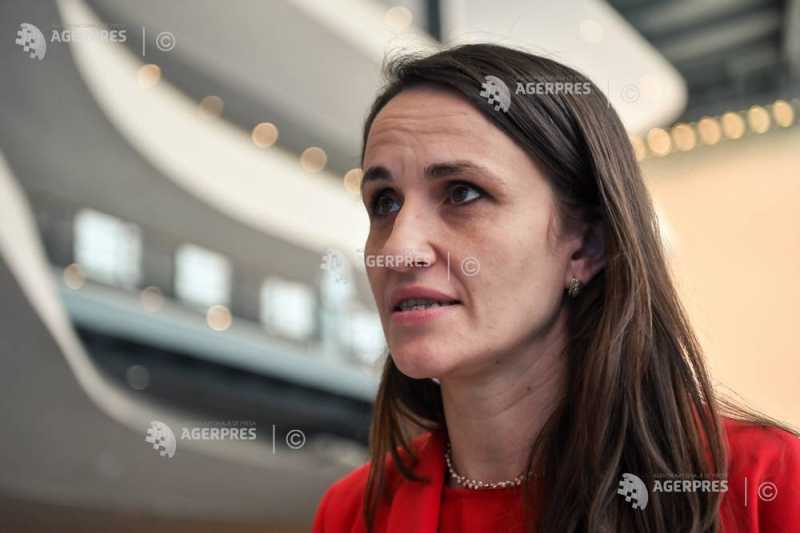
Foto: ALEX MICSIK / AGERPRES FOTO
Flux: EnglishData: 24.09. 11:56
Afisari: 0
Conţinutul website-ului www.agerpres.ro este destinat exclusiv informării publice. Toate informaţiile publicate pe acest site de către AGERPRES sunt protejate de dispoziţiile legale incidente. Sunt interzise copierea, reproducerea, recompilarea, modificarea, precum şi orice modalitate de exploatare a conţinutului acestui website. Informaţiile transmise pe www.agerpres.ro pot fi preluate, în conformitate cu legislaţia aplicabilă, în limita a 500 de semne. Detalii în secţiunea Condiţii de utilizare. Dacă sunteţi interesaţi de preluarea ştirilor AGERPRES, vă rugăm să contactaţi Direcţia Marketing - marketing@agerpres.ro.